It’s time to think outside the box and try something different
by: Kelly Parker
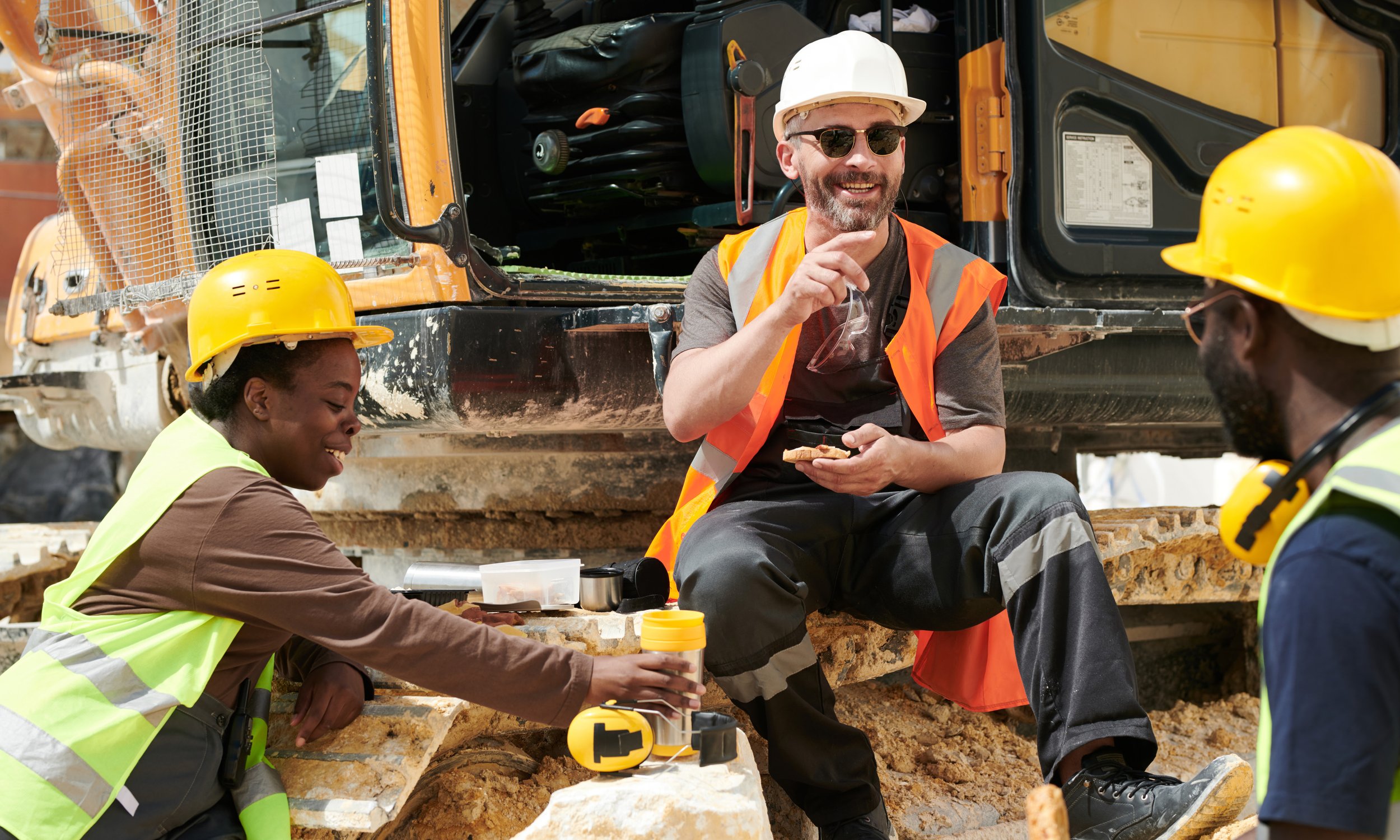
In the corporate world, COVID-19 altered the fabric of our professional lives. A large majority of employees worked from home and were introduced to a new life-work balance that didn’t previously exist in their jobs. Working from home highlighted the potential for workplaces to foster a happier, more productive, and loyal workforce through flexibility. Yet, this adaptability never really hit the construction industry, particularly the aggregate sector, where employees cannot do their job remotely, and logistical demands are high—often requiring workers to begin at the crack of dawn and work a 12-hour shift.
But this new flexibility is what our workforce is searching for. Is achieving work-life balance feasible in an industry where frontline workers often face long hours with minimal time off? Not only did the pandemic force companies to explore flexible work options but because it disproportionately affected working women, it shed a light on the impact of gender inequality and how companies can reduce barriers for female employees—something the aggregate industry is currently tackling.
Recruitment and retention strategies are integral to the labour shortage problems the industry is facing as an aging workforce is retiring. How do we solve these problems?
Training Colleges
One way is to build relationships with training colleges so that you can speak to young workers and help them overcome any misconceptions they may have about the aggregate industry. “We have agreements,” explains Mike Andrighetti, Vice President of Ethier Sand & Gravel, “with some of the training colleges here locally where we’re able to monitor and have supervisors attend the training with the employees, so we have a relationship with them before they actually start work.”
“Any operator can go get a job working in construction or anywhere else where the piece of equipment will work,” continues Andrighetti. “But to attract them to quarrying and a pit setting is a lot different. It may be a kind of dirty-sounding business, but it’s also a lot of fun. You have to make it exciting and engaging.”
Hours of work
One strategy to address this shift is to move away from the traditional 12-hour shift model. “You have to schedule your shifts and treat your people in ways that may be a lot different than what the old guard used to do,” stresses Andrighetti. “Especially in the quarry or pit setting. Trying different things that are not traditional to the industry, like removing the traditional night shift from the equation, is something that has worked for us. It allows us to have these young people who value time at home and life away from work more than maybe the 30-year employee has. I think that’s been a real driver for us.”
Ethier Sand & Gravel has transitioned from 12-hour rotations to a production day of two eight-hour shifts, a change that has yielded positive results. However, moving to three eight-hour shifts in a 24-hour production day could exacerbate staffing shortages. Andrighetti notes that effective recruitment messaging is crucial: “If you’re dangling the carrot out there that the worker is going to have more time at home and better work-life balance – which is the point – you’re attracting the group that’s opposed to the 12-hour shifts.”
The transition period when implementing this strategy may present challenges, potentially leaving the company short-staffed until sufficient staffing levels are reached. “It’s tough. You just have to have the right people who create an environment where (new employees) will be welcomed,” Andrighetti explains. “And it’s a good place to work – a team environment. If you establish all of that, then you hope that transition period is easy on the employees and happens fairly quickly, obviously for the employer.”
Andrighetti emphasizes that feedback from employees has been overwhelmingly positive, as the changes have fostered the desired work-life balance. “Sometimes, in certain circumstances, you need to accommodate the employees. Everyone now, especially with this younger group, has different needs than employees have had in the past. Part of work-life balance is ‘Hey, my kid’s got a recital today,’ or a medical appointment, and that’s something that companies are increasingly trying to accommodate.”
Balancing Flexibility with Industry Demands
Gone are the days when employees would spend their entire careers with one company. Today’s workforce anticipates working for multiple employers and even changing careers, further complicating retention efforts. Additionally, their priorities have shifted from a work-first mentality to a significant emphasis on work-life balance.
The nature of work in pits and quarries—where teamwork is essential—may not allow for complete flexibility, but accommodations can still be made. “Employees have to be mindful of where they’re working. Some situations may not be ideal to allow for that,” says Andrighetti, “But at the same time, if you want to be able to say ‘Okay, you do have a life outside of work and you can go to your kid’s recital,’ you have to be somewhat accommodating, and planning ahead certainly helps.”
In line with the increased focus on work-life balance, companies are also enhancing services to support employees’ overall mental health. “We offer employees a pretty robust employee assistance program,” Andrighetti explains. “It gives all employees access to doctors, legal advice, counseling, and rehab if they need it. It’s a pretty comprehensive group of resources that these employees can access and get the help they need at any time with a phone call.”
Attracting new people to the aggregate industry
Despite the presence of many women in the aggregate industry, they remain significantly outnumbered by men, a disparity that presents additional challenges. Lisa Laronde, President of RSG International and Powell Contracting, identifies harassment, discrimination, and isolation as primary obstacles. “We do a really good job of getting women trained to be able to get into the trades, but then they get on a job site and they’re the only woman there. They’re not prepared for that. It would be nice if we could at least prepare women, saying ‘this is the environment you’re going to enter into,’ versus pretending it doesn’t exist. We need strategies on how to deal with that.”
Childcare is another significant barrier for women in construction. “We don’t have nine-to-five hours. You have to be able to get to work early, sometimes before childcare is open. As part of the North American Women in Construction and the Canadian representative for the Global Women in Construction panel, I can say this is a global issue,” says Laronde. Access to clean washrooms and feminine hygiene products is also a critical concern.
To address these issues, Laronde’s firms established a Diversity, Equity, and Inclusion (DEI) Committee, which focuses on creating a more accommodating work environment. “Women need clean access to washrooms, which is important for everyone. One of the first things we did was to have an all-gender washroom or a gender-neutral washroom. Construction is reportedly the number one job for transgender men, so everyone needs a safe place to go to the washroom. It was a huge eye-opening experience for me. I thought I was well aware, but I realized I come from a place of privilege. It’s important to speak not only for women but for other underrepresented ethnicities in our industry.”
Additionally, the firm introduced a “quiet room.” “That allows you, if you’re nursing, a private place to pump breast milk or just a space for alone time if you need to gather your thoughts. It’s also used for prayer as we found some people were praying in bathrooms, which is not a nice place to be.”
As the aggregate industry grapples with a labour shortage, it is crucial to consider these details. “Women represent 50% of the population but only 5% of the skilled trades. It’s crazy that we’re not attracting more women. If industry, unions, education, and government come together, we can attract more women, Indigenous people, and new immigrants into the construction industry. These are all opportunities for us to be successful,” emphasizes Laronde.
It’s clear that introducing work-life balance practices, as well as ensuring your recruitment practices are attracting the full scope of potential employees will help solve these issues.
Andrighetti agrees, and concludes by providing the following advice: “Don’t be afraid to just think outside the box and try something different. It’s a pretty traditional industry that needs to think a little differently about how it wants to treat its employees.”